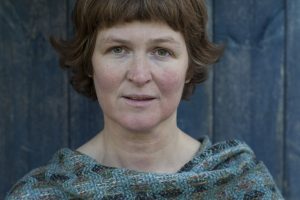
Hands Up for Trad’s Women in Music and Culture 2026 list has been announced to celebrate just some of the women working in Scotland.
Launched as part of International Women’s Day 2026, we shine the spotlight on 12 women who all contribute towards Scotland’s cultural landscape through their work. Read the 2026 list here.
We asked Mairi Campbell to tell us more about their work, influences and ambitions for the future.
How did you first get involved in the arts and who were your early influences?
My mother was a great influence, and her mother too. I grew up in a musical household. My three sisters and I were all encouraged to play string instruments and I started on violin aged 6, piano too, and then changed to viola aged 11. I continued to develop as a player, attended the City of Edinburgh Music school at Broughton High school in years 5 and 6 and went onto study viola at the Guildhall in London.
My more private interests lay in a desire to understand music as a healing modality and I did hope to become a music therapist, but by the time I left college I was playing a lot and continued in that vein. My other interest was mime, and I took a couple of classes while studying in London. That interest resurfaced as an interest in making my theatre shows.
Traditional music always had a special place in my heart. I wanted to play this kind of music, jigs and reels, but had very little opportunity to learn it until after leaving college.
Growing up, going on holidays to the isle of Lismore I heard dance music which I loved. Bill Black was a regular at dances.
David francis was an influence on learning traditional music. He taught me my first tune by ear. Other important figures were Cape Breton fiddlers, like Buddy and Natalie McMaster. I decided to learn step dancing and fiddling from that tradition in my early twenties, and for the next five years or so, would visit frequently to learn as much as possible.
In a time when many artists and creative professionals are facing significant challenges, how have you developed and evolved your creative practice over the past few years?
I have always enjoyed teaching and performance, so I’ve mixed those two elements continuously: teaching fiddle and song for the Scots Music Group, setting up my own fiddle camps on the island of Lismore since 2007 and running improvisation and music workshops online, in particular since 2020.
Since 2012 I have made five music theatre shows with Kath Burlinson and expanded my form to include theatre, storytelling and movement, very much in keeping with heartfelt direction. – which is good!
Who or what interests you creatively?
At the moment I’ve returned to an old interest in music and healing, so I’m training to become a Biofield Tuning practitioner, using tuning forks to bring cohesion to our torroidial field. It’s super fascinating.
I spend 6 months a year on the island of Lismore where it’s peaceful. The island community interests me and being involved with various goings on, like the shop management board takes time.
What are your plans for the next year or so and/or what are your longer term creative ambitions?
I have four fiddle camps between March and June on Lismore this year, based on Lismore. I hope to get a tour of Living Stone in the Autumn and setup more shows of Auld Lang Syne for January 2027.
My long term ambitions are to repeat my shows for years to come, run my fiddle camps and run my own biofield tuning practice in Edinburgh and Lismore.
Find out more about Mairi Campbell here.
Read the Hands Up for Trad’s Women in Music and Culture 2026 List
Hands Up for Trad are an organisation who work with Scottish traditional music, language and culture. If you would like to support our work you can donate here.