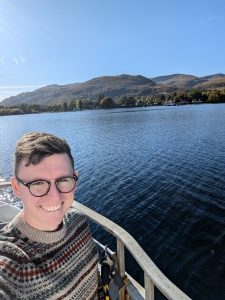
 Weel duin tae David Scott wha hae bin nominatit in Scots Teacher o the Year (sponsored by Qualifications Scotland) in the Scots Language Awards. Vote now!
The 2026 Scots Language Awards tak place on Saturday 19th September at the iconic Discovery Centre, home of the RRS Discovery Ship (1pm). Reserve yer ticket here.
The awards will be a daytime event this year, making them as inclusive and accessible to as many award nominees from across Scotland as possible.
We askit David Scott o David Scott thae speirins.
Tell us aboot yersel or yer ootfit.
Am a primary teacher working in Angus, currently teaching P5, although A grew up in Fife and that is still very much where ma ain Scots comes fae.
Scots has been part of ma life for as long as A can mind. Some of ma earliest memories of really loving the leid are learning Burns poetry at school and listening tae ma dad singing Scots sangs while playing his banjo. There was always a funny contradiction there though – Scots was something tae sing, recite and enjoy, but A could still get telt aff if A didnae sound “proper” when A wis speaking in public! A think that experience has stayed wi me and has shaped a lot of how A now think aboot Scots in education.
Over the last few years, Scots has become an increasingly important part of ma classroom practice and wider professional work. A’ve tried tae make it a normal, meaningful part of learning rather than something that only appears around Burns Night – through reading, writing, creativity, pupil leadership and across different areas of the curriculum.
A’ve also had opportunities tae take that work beyond ma ain classroom. A’ve worked wi Scots Hoose, completed the Open University Scots Language Teacher course, and through Education Scotland’s Curriculum Improvement Cycle Am involved in developing a progressive curriculum for the teaching and learning of the Scots leid from Early through tae Fourth Level.
At the hert of it aw, though, is something fairly simple: A want bairns tae recognise that the leid they hear and use at hame and in their communities has value. Scots isnae “bad English”, and it isnae just a voice ye put on for a poem. It is a living leid that belongs in oor classrooms just as much as it belongs in oor hames and communities.
Whit wis it got ye involvit wi the Scots leid?
Ma earliest interest in Scots probably came fae ma folks. Ma dad would sing Scots sangs while playing his banjo, and at primary school A took part in Burns Suppers and mind reciting *To a Louse*. Scots was always there in some form, even if A didnae really think too deeply aboot it as a leid at the time.
The real turning point for me professionally came during Covid. Like every teacher, A wis trying tae find ways tae keep bairns engaged while we were learning fae hame, and A had the idea of reading them a Scots book online. Because it was going tae be shared over the internet, A needed tae seek permission, which led me tae get in touch wi Itchy Coo and Matthew Fitt.
That fairly simple idea ended up opening a much bigger door for me.
One thing led tae another, and A started tae explore Scots much mair seriously in ma classroom. It moved beyond reading a Scots story now and again and became something A wanted tae build into learning properly – through literacy, creativity, language and culture. A began developing mair Scots lessons, looking for ways tae weave the leid through different areas of the curriculum, and eventually set up a Scots Pupil Leadership Group so the bairns themselves could help promote and celebrate Scots across the school.
That growing interest eventually led me tae complete the Open University Scots Language Teacher course, which helped me develop ma knowledge and think much mair critically aboot how Scots is taught in schools.
Now, through Education Scotland’s Curriculum Improvement Cycle, Am part of the group helping tae develop a progressive curriculum for the teaching and learning of the Scots leid from Early through tae Fourth Level.
It still amazes me a wee bit that wanting tae read a Scots book tae ma class during lockdown eventually led me there. But A think that sums up ma journey wi Scots quite well – curiosity led tae confidence, confidence led tae mair learning, and mair learning has led tae wanting tae help give Scots a stronger and mair sustainable place in education.
Why dae ye feel it is important tae use Scots in everyday life?
For me, it is really about culture, identity and making sure we dinnae lose something that is an important part of who we are.
A lot of the bairns A teach dinnae speak much Scots at all. Some hear it at hame or in their communities, but plenty dinnae, and that was actually one of the things that pushed me further towards teaching it. A didnae want their only experience of Scots tae be a Burns poem once a year or a handful of words they thought sounded funny. A wanted them tae understand that Scots is a leid in its ain right, wi its ain history, vocabulary, grammar and literature, and something that is still part of Scotland today.
A think there is a danger that if we assume bairns will simply pick Scots up naturally, fewer and fewer of them will actually get that opportunity. Language is part of culture, and if we stop using it, teaching it and celebrating it, we risk gradually losing that connection.
For me, teaching and using Scots is therefore as much about passing something on as it is about recognising what bairns already bring wi them. Whether a bairn speaks Scots every day or has barely heard it before, A want them tae leave ma classroom knowing what Scots is, understanding why it matters, and feeling that it belongs tae them as part of their culture.
That doesnae mean Scots has tae replace English or that everybody has tae speak the same way. It is about giving bairns access tae another part of their linguistic and cultural heritage and letting them enjoy it through stories, songs, poems, humour, conversation and creativity.
Scots is a living leid, but it will only stay that way if new generations continue tae hear it, learn it, use it and value it. For me, that is why it has tae be part of everyday life rather than something we only bring oot for special occasions.
Dae ye hae a favourite Scots phrase or saying?
Gonnae no dae that.
Awa an bile yer heid.
Is there a Scots speaker who inspires you?
A dinnae think there is one Scots speaker who inspires me above aw others. Growing up, Jack and Victor certainly played their part, but ma biggest influences would probably be ma papa and ma fowks.
Scots was something A heard naturally around family. It wisnae presented as a lesson or something special; it was simply part of how folk spoke, joked, telt stories and expressed themselves. Looking back, A think that everyday exposure shaped ma love of the leid mair than A realised at the time.
A’ve always loved that characters like Jack and Victor brought that same kind of everyday Scots intae popular culture too — familiar, funny and completely normal.
For me, the speakers who inspire me maist are the folk who keep Scots alive simply by using it.
Do you hear Scots spoken regularly in your local area? Have you noticed any changes over time?
Growing up in Fife, A heard Scots aw the time. It wisnae something A really thought aboot – it was simply part of family life, conversations, humour, sangs and the way folk around me spoke.
There was always a wee bit of duality tae it though. Scots was completely normal at hame and among folk ye knew, but there were also times when A was telt tae “speak properly”, particularly in public or more formal situations. Maybe that isnae surprising when baith ma parents were teachers themselves, but came fae a generation where speaking Scots in schuil was often discouraged rather than celebrated! Looking back, A think that says a lot about the position Scots has held – loved and used every day, but no always afforded the same status or respect as Standard English.
In ma job now, A actually hear less Scots fae bairns than A might have expected. Some still use it naturally, but plenty barely use it at aw. They might encounter Scots through poetry, stories and writers such as J.K. Annand or Matthew Fitt, but for some it isnae necessarily a leid they are hearing and using every day.
Rather than putting me off, that has made me mair determined tae teach it. If bairns arenae picking the leid up naturally through everyday life, then A think schools have an important role in making sure they still get the chance tae hear it, understand it, use it and enjoy it.
So the biggest change A’ve noticed is probably that Scots feels less automatic for some bairns than it did when A was growing up. In a funny way, A’ve gone fae being telt no tae use too much Scots in schuil tae being the teacher actively trying tae make sure it has a place there – and A quite like that full circle.
Ony particlar career heighlichts
A’ve been really fortunate tae have a few Scots-related career highlights so far.
Being nominated for Scots Teacher of the Year back in 2022 was a huge moment for me, especially because at that stage A was still relatively early in ma journey wi the leid. Since then, A’ve had opportunities tae work wi Scots Hoose and was invited tae speak about Scots language education wi FRLSU, which gave me the chance tae share some of ma practice and thinking beyond ma ain school.
One of the things A’m proudest of has been creating a Scots Pupil Leadership Group in ma school. A wanted Scots tae be something the bairns could take ownership of rather than always being led by adults, and seeing them help promote the leid across the schuil has been brilliant.
More recently, A’ve been lucky enough tae become part of the small team involved in Education Scotland’s Curriculum Improvement Cycle and given the fairly mammoth task of helping create a progressive Scots Language Curriculum from Early through tae Fourth Level. Being trusted tae contribute tae something that could help shape how Scots is taught much more widely is probably one of the biggest professional privileges A’ve had.
But some of ma favourite highlights are much smaller. We had *drookit* as oor Scots Word of the Week, and not long afterwards one of the bairns used it completely naturally in a piece of literacy writing. The rest of the piece was in English, but there it was – *drookit* sitting right in the middle of it.
It was only one wee word, but A remember thinking, “Aye, that’s it.”
We hae tae start somewhere.
Wha’s yer plans fir the days aheid?
There is still plenty A want tae dae.
The biggest thing just now is continuing ma work through Education Scotland’s Curriculum Improvement Cycle and helping tae develop the new Scots Language Curriculum. It is a fairly mammoth task, but an exciting one, and A’m really keen tae see it move fae something being written and developed intae something bairns are actually learning through in classrooms.
A’d love tae be one of the first teachers tae properly use the curriculum in ma ain schuil and tae learn fae that experience – what works, what needs adapted, and what support teachers and bairns actually need when Scots becomes a more structured part of learning.
A also want tae actively push for Scots tae be seen as an L2 option in schools, no simply an L3 or something additional that only appears when there is time. If we genuinely value Scots as a leid, A think we need tae be ambitious about the place it can have within language learning.
Alongside that, A want tae continue working wi Scots Hoose and Education Scotland tae create accessible lessons, resources and support for schools. A think that will be hugely important. Curriculum change can feel daunting enough for teachers, never mind introducing a brand-new curriculum for a leid that some staff may no yet feel confident teaching. If we want Scots tae succeed, the materials need tae be practical, welcoming and easy for teachers tae pick up and use.
A’d also like tae keep developing pupil leadership around Scots. One of the things A’ve learned is that bairns can be some of the best advocates for the leid when they are given genuine ownership of it.
Ultimately, A’d love tae help make the transition as easy and exciting as possible for schools. A want Scots tae become something teachers feel confident teaching, bairns enjoy learning, and communities recognise as an important part of oor culture.
If we are creating a new curriculum, then A think we should be bold enough tae make sure it actually changes something.
Read more about David Scott
Facebook: http://www.facebook.com/
X / Twitter: @
Instagram: @
TikTok: @
The Scots Language Awards are in Dundee on the 19th September at 1pm. There wull be some grand entertainmint includin a recitals fae Yvonne Tait an Hugh Macmillan alang wi musical performances fae Iona Fyfe and Scott Gardiner.
To attend the Scots Language Awards there are a few tickets remaining. Click here to reserve your tickets.
Join Elfie Picket Theatre for the Scots language nicht BLETHER, fur a nicht o music, poetry and stories aa celebratin Scots Leid & culture. We hae twa special guests jynin us and a wee open mic. Leadin us intae a big Dundee Fringe Ceilidh! Startin at 6pm, tickets £10.
If you would like to support Hands Up for Trad in their work with Scottish language please consider donating here.