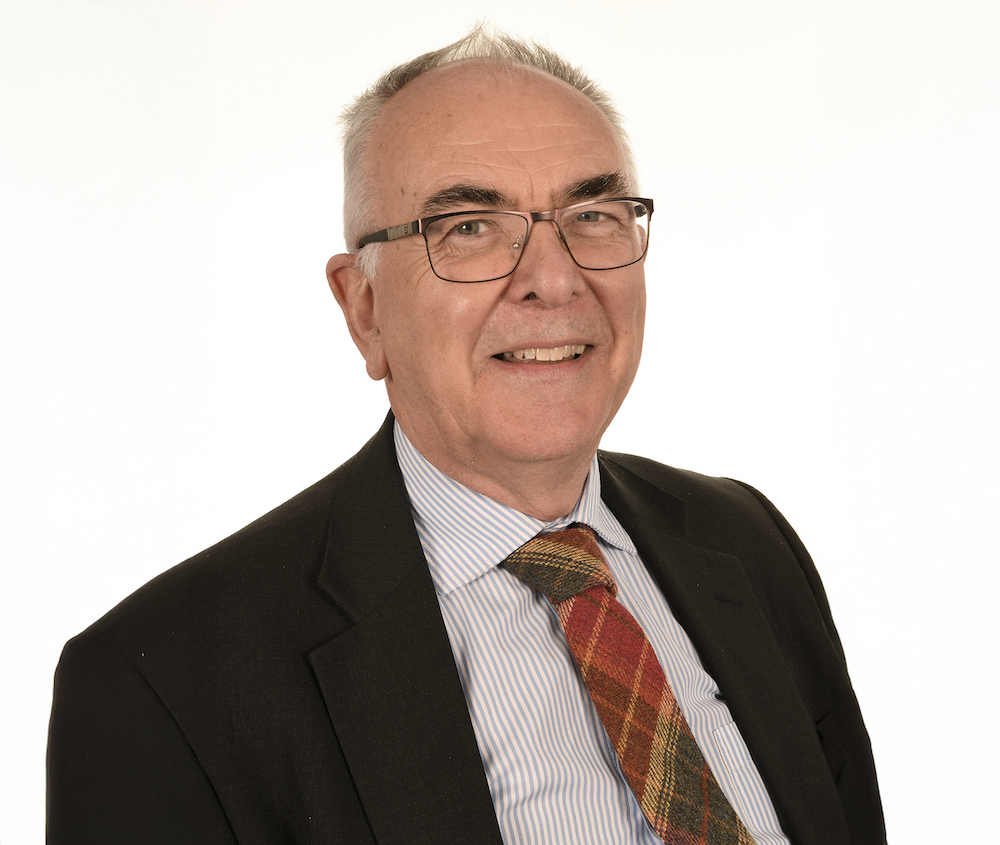
A native of North Uist and graduate of Aberdeen University, Professor Boyd Robertson has devoted his professional life to the promotion, development, and preservation of Gaelic language, education, and culture. His contributions span decades of dedicated service across educational institutions, cultural organisations, and governmental bodies, making him one of the most influential figures in the modern Gaelic movement.
After graduating from Aberdeen University, Robertson trained as a teacher and went on to hold promoted posts at Oban High School before moving into teacher education at Jordanhill College of Education and the University of Strathclyde. At Strathclyde, he became Reader in Language Education and Head of Language Education, positions that allowed him to influence the development of language teaching methodology and teacher training across Scotland. His academic expertise and practical experience in education provided the foundation for his later leadership roles.
From 2009 to 2018, Professor Robertson served as Principal of Sabhal Mòr Ostaig, the National Centre for Gaelic Language and Culture on the Isle of Skye. In this role, he led one of Scotland’s most important Gaelic institutions during a crucial period of development, overseeing its work in higher education, research, and cultural promotion. Under his leadership, Sabhal Mòr Ostaig continued to serve as a vital hub for Gaelic scholarship and as a beacon for the language’s future.
Professor Robertson possesses a wide knowledge of Gaelic society and culture and has been deeply involved in the work of Gaelic agencies and community bodies throughout his career. He served as Chair of the Gaelic Books Council when it became independent of the University of Glasgow, helping to establish it as an autonomous organisation dedicated to supporting Gaelic publishing. He was the first Chair of the Glasgow arts body, An Lòchran, demonstrating his commitment to promoting Gaelic arts and culture in Scotland’s largest city. His involvement with An Comunn Gàidhealach included serving as Vice President and as Convener of the 1978 National Mòd in Oban, one of the most prestigious events in the Gaelic cultural calendar.
Robertson also served as Vice-Chair of Comunn na Gàidhlig, the language promotion body, and was a member of the initial Bòrd na Gàidhlig, the Government-appointed Gaelic development agency. These roles placed him at the heart of strategic planning and policy development for Gaelic at the highest levels, allowing him to influence the direction of language planning across Scotland.
One of Professor Robertson’s most significant achievements came in the mid-1980s when he was in the forefront of the successful campaign to establish Gaelic-medium education in Glasgow in 1985. This groundbreaking initiative opened up Gaelic education to urban communities and demonstrated that Gaelic-medium education could thrive outside the traditional Gaelic heartlands. Robertson went on to become Chair of the School Board of Sir John Maxwell Primary School, maintaining his close involvement with the practical implementation of Gaelic education. This pioneering work in Glasgow paved the way for the expansion of Gaelic-medium education across Scotland’s cities and contributed significantly to the revitalisation of the language.
Professor Robertson was involved in the initiation of the inter-university Faclair na Gàidhlig/Scottish Gaelic Dictionary project, a major scholarly undertaking to create a comprehensive historical dictionary of the Gaelic language. He served as Chair of the Steering Committee of the Faclair project and remains a member of its Advisory Board, demonstrating his long-term commitment to this important lexicographical work. He was also Chair of the Steering Committee of the inter-university Soillse research project from its inception, further contributing to the development of Gaelic research infrastructure.
With extensive experience of teacher education, curriculum development, and production of resources for learners, Professor Robertson has written widely on Gaelic education. His publications include the Teach Yourself Gaelic course (in association with Iain Taylor), which has introduced countless learners to the language, and the Essential Gaelic Dictionary (compiled with Ian MacDonald), an invaluable resource for students and speakers alike. He has contributed chapters on Gaelic Education to five editions of Scottish Education (Edinburgh University Press) and on Gaelic in Scotland to The Other Languages of Europe (Multilingual Matters), ensuring that Gaelic education is represented in key academic and policy discussions.
Professor Robertson’s involvement with broadcasting has been substantial and sustained. He was a member of the BBC’s Educational Broadcasting Council for Scotland and chaired its Gaelic Advisory Panel for several years, helping to shape the BBC’s approach to Gaelic programming and educational content. In the 1990s, he took on the role of Principal Language consultant for the long-running Scottish Television Speaking our Language series, which brought Gaelic into homes across Scotland. He had a similar function with Cànan Ltd in the production of support material for the television programmes and later became a member of the Steering Group for BBC LearnGaelic.net, an online resource that has made Gaelic learning accessible to a global audience.
He undertook numerous assessment roles for the Scottish Qualifications Authority (SQA) and chaired its Gaelic Panel for many years, ensuring that Gaelic qualifications maintained high standards and remained relevant to learners’ needs. He was a member of the SQA Group that produced the Gaelic Orthographic Conventions report, which was designed to standardise Gaelic spelling—a significant contribution to the modernisation and accessibility of written Gaelic.
Professor Robertson has made a significant contribution at international level in the field of minority languages through participation in the work of The Council of Europe, the European Commission, the Socrates International Co-operation Programme on Less Widely Taught Languages, and the Foundation on Inter-Ethnic Relations in The Hague. He has produced two editions of a dossier on The Gaelic language in education in the UK for Mercator-Education in the Netherlands, providing authoritative information about Gaelic education to an international audience. He has addressed conferences and seminars in Canada, France, Germany, Ireland, Spain, and The Netherlands, representing Gaelic interests and sharing Scotland’s experiences with minority language communities worldwide. He has conducted reviews of higher education provision in Iceland, the Irish Republic, and Northern Ireland, bringing his expertise to bear on language education issues beyond Scotland’s borders.
Beyond his work in Gaelic, Professor Robertson has made broader contributions to Scottish public life. He was a member of the Commission on Parliamentary Reform which reported to the Presiding Officer of the Scottish Parliament in June 2017, contributing his experience and perspective to the development of Scotland’s democratic institutions. After retiring from Sabhal Mòr Ostaig, he served as Chair of the NHS Highland Board from 2019 to 2023, a period that covered the COVID pandemic, demonstrating his willingness to serve the public during one of the most challenging periods in recent history.
Professor Robertson’s exceptional contributions have been recognised through numerous honours and awards. His services to education were recognised by the award of an Honorary Doctorate by the University of Edinburgh in 2014, and his services to Gaelic by the Gaelic Ambassador accolade bestowed by the Scottish Government and An Comunn Gàidhealach in 2015. He was made a Fellow of the Association of Scottish Literary Studies in 2012 and a Fellow of the prestigious Royal Society of Edinburgh in 2021, one of the highest honours available to scholars in Scotland. In 2024, he was invited to deliver the Annual Moray House Lecture at the School of Education of the University of Edinburgh, and he currently serves as an Honorary Professor at the University of Edinburgh.
Throughout his career, Professor Boyd Robertson has demonstrated an unwavering commitment to Gaelic language and culture, working at every level from grassroots community initiatives to international policy forums. His contributions to Gaelic-medium education have helped secure the language’s future by ensuring that new generations can be educated through Gaelic. His work in teacher education, curriculum development, and resource creation has provided the practical tools needed to make Gaelic education effective and accessible. His leadership of key institutions and his service on countless boards, committees, and advisory bodies have shaped the strategic direction of Gaelic development for decades.
Professor Robertson’s international work has raised the profile of Gaelic on the world stage and has contributed to the broader movement for linguistic diversity and minority language rights. His scholarly publications have ensured that Gaelic is represented in academic discourse, while his practical work in broadcasting and online resources has made the language accessible to learners worldwide. His ability to work across different sectors—education, broadcasting, publishing, cultural organisations, and government—demonstrates the breadth of his vision and the depth of his commitment.
Professor Boyd Robertson’s receipt of the Services to Gaelic Award recognises a lifetime of exceptional dedication to Gaelic language, education, and culture. His work has been instrumental in transforming Gaelic from a language under threat to one with a secure educational infrastructure, institutional support, and growing presence in public life. Through his leadership, scholarship, and tireless advocacy, he has helped ensure that Gaelic remains a living, vibrant language with a confident future, enriching Scotland’s cultural diversity and maintaining vital connections to the nation’s heritage and identity.