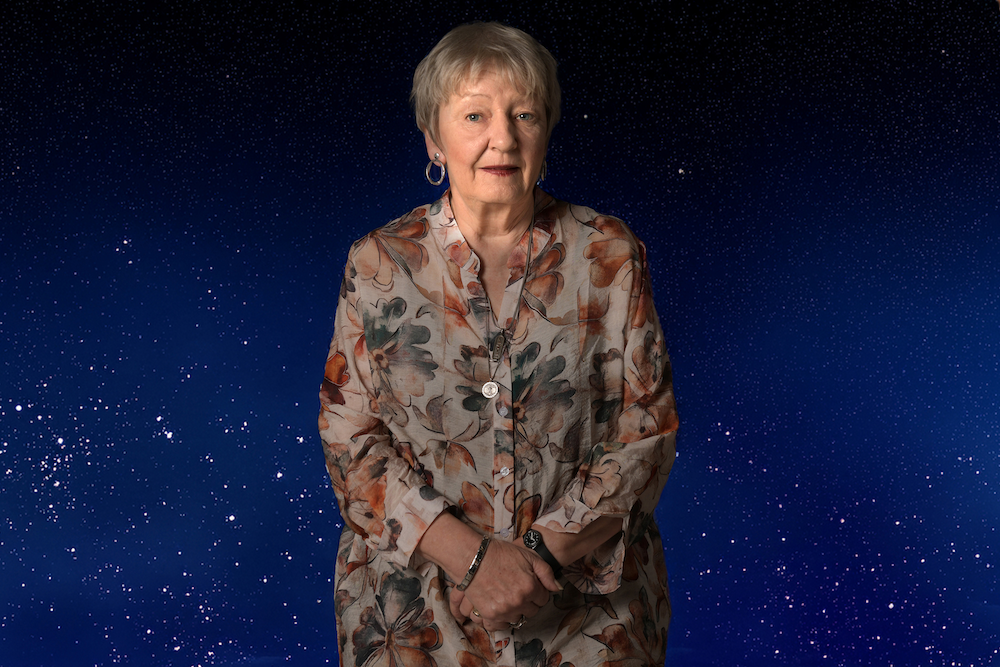
Born in Lanark, Lanarkshire into a military family, Elspeth Cowie’s early years were shaped by the distinctive life of an “army brat,” daughter of the Cameronians regiment. Her childhood took her across continents, growing up in Edinburgh, Kenya, Germany, and Hamilton before leaving school, providing her with exposure to diverse musical traditions and cultures that would later inform her approach to Scottish traditional music.
The pipes and drums were the soundtrack to Elspeth’s childhood, a sound that “still raises hairs on the back of my neck, in a good way,” as she recalls. The Pipe Major taught her Highland fling and sword dance, grounding her in traditional Scottish dance forms from an early age. From the age of eight, she learned Scottish country dancing at school, developing the physical connection to traditional music that would remain with her throughout her life. Her father’s deep love of Burns proved influential, and Elspeth won a Burns Prize at school for singing songs by the Bard, establishing early recognition for her vocal abilities.
Growing up in 1960s Scotland, Elspeth found herself captivated by the airplay given to acts like Robin Hall & Jimmy MacGregor, the Corrie Folk Four, and the McCalmans, which hinted at fresh musical landscapes emerging within Scottish traditional music. She became a frequent visitor to folk clubs in Hamilton and Glasgow, immersing herself in the vibrant folk revival of the period. As an “army brat,” she had soaked up an eclectic range of traditional and contemporary music during the family’s travels, from Scottish dance band music to folk, pop, blues, and rock. On leaving school, she worked for an independent record store in Glasgow, buying in their blues and jazz records whilst singing part-time with social and working club acts, gaining valuable performing experience across diverse musical styles.
Upon moving to the northeast of Scotland, Elspeth became deeply involved in the Aberdeen Folk Song Club, serving on the committee, performing floor spots, and learning muckle sangs from renowned tradition bearers including Lizzie Higgins. This immersion in the authentic song tradition of the northeast proved transformative, connecting her directly to one of Scotland’s richest veins of traditional song. Aberdeen in the late 1970s and 1980s hosted a thriving folk song scene with limited but high-quality music and song sessions. The wider county maintained a robust tradition of fiddle and accordion music, and the fantastic small festivals operated under the umbrella of the Traditional Music and Song Association provided crucial platforms for traditional artists.
Elspeth carried her Aberdeen experience to Edinburgh, where she performed as lead vocalist and bodhrán player with Seannachie and later with the vocal trio Chantan. Edinburgh in the late 1980s and 1990s was, in Elspeth’s words, “jumping.” Traditional and folk music mingled with jazz and blues around session tables, and the cross-fertilisation could be heard in the swing and innovation of the playing. She ran Folk at the Tron along the Royal Mile throughout the 1990s, where there was a considerable appetite for both folk and traditional music. The venue ran nightly sell-out shows of Scots and Gaelic song for several years at the Edinburgh Festival Fringe, demonstrating the strong audience demand for traditional song during this period.
Elspeth’s contributions extended beyond performance into advocacy and organisation. She served as full-time National Organiser of the Traditional Music and Song Association for five years during a crucial period when politicians and arts bodies were starting to show more concrete support for traditional music. In this role, she was privileged to help further the cause of traditional music at a time when institutional recognition and support were beginning to grow. She witnessed firsthand how bigger music venues would book headline folk acts secure in the knowledge that they would sell out, though she recognised that it remained challenging for aspiring traditional and folk acts to sustain themselves from bookings in small venues—a situation, she notes, that hasn’t changed.
What Elspeth particularly values about working in Scottish music is how it reinforces our sense of identity, encompassing our stories, trials, tribulations, successes, and joys. She views Scotland’s traditions as gifts to ourselves and the world, standing alongside innovations like television and penicillin in their importance. As a performer, she finds pure joy in sharing Scottish songs and stories, believing that traditional music serves to connect people to their cultural roots and to each other.
Latterly, Elspeth has enjoyed touring with the a cappella group Wheen o’ Wimmin, with festival performances in the offing. She is also working on a collaborative EP of songs based on Celtic myths, legends, and rituals, continuing to explore the deep connections between Scotland’s musical traditions and its ancient cultural heritage. Beyond her performing work in Scotland, Elspeth co-organises folk and traditional music sessions in Spain, ensuring that participants and listeners from many nations get to hear Scots traditional song. She finds it remains a revelation to many people, as many still equate “traditional music” with Irish traditions, unaware of the richness and distinctiveness of Scottish song.
Elspeth observes that Scottish music goes through periodic peaks and troughs of popularity, participation, and financing, with tastes and priorities changing over time. However, she believes the current talent in the scene is exceptional—”off the dial,” in her words. She recognises that initiatives like Hands Up for Trad and TRACS form a vital part of the ecosystem, helping to support and advocate for talent that needs to make even a basic living. More fundamentally, she values how these organisations ensure opportunities for people to meet and enjoy the sheer joy of making and listening to Scottish music in or close to the places where they live, maintaining the grassroots connections that keep traditional music vital and accessible.
Throughout her career, Elspeth has witnessed significant evolution in the Scottish traditional music scene. She recalls how, during her Aberdeen years, bigger music venues could book headline folk acts with confidence they would sell out, while today’s landscape presents different challenges. She notes the decline in the number of folk clubs, perhaps because of the variety of other outlets available for people to pursue their interest in the music. Yet she also observes positive developments, particularly in how traditional and folk music has mingled with other genres like jazz and blues, creating rich cross-fertilisation that has kept the tradition dynamic and evolving.
Elspeth Cowie’s induction into the Scottish Traditional Music Hall of Fame recognises her multifaceted contributions to Scottish traditional song—as a powerful and authentic singer who learned directly from tradition bearers like Lizzie Higgins, as an organiser who created platforms for traditional music through Folk at the Tron and her work with the Traditional Music and Song Association, as an advocate who helped secure greater recognition and support for traditional music during a crucial period, and as an ambassador who continues to share Scottish song with international audiences. Her career exemplifies how traditional music, rooted in specific places and communities, can speak to universal human experiences and connect people across cultures and generations.